
Last Updated on May 19, 2026 by angeladrake127
If you’re googling “family road trip tips,” you’re probably somewhere in the planning stage. You’ve got a destination in mind, or at least a general direction, and you want to do it right. Maybe you’ve done a family road trip or two and want to do it better this time. Maybe this would be your first one and you’re not sure where to start.
Either way, you already know a road trip is often the move. No flights, no checked bags, no trying to fold a stroller at a TSA checkpoint. What you might not have figured out yet is which route is right for your family, how to pack the car without it turning into a game of Tetris, or what to do when hour four hits and everyone’s done. That’s what this guide is for. Routes, packing, how to keep everyone sane in the car, and what it all actually costs.
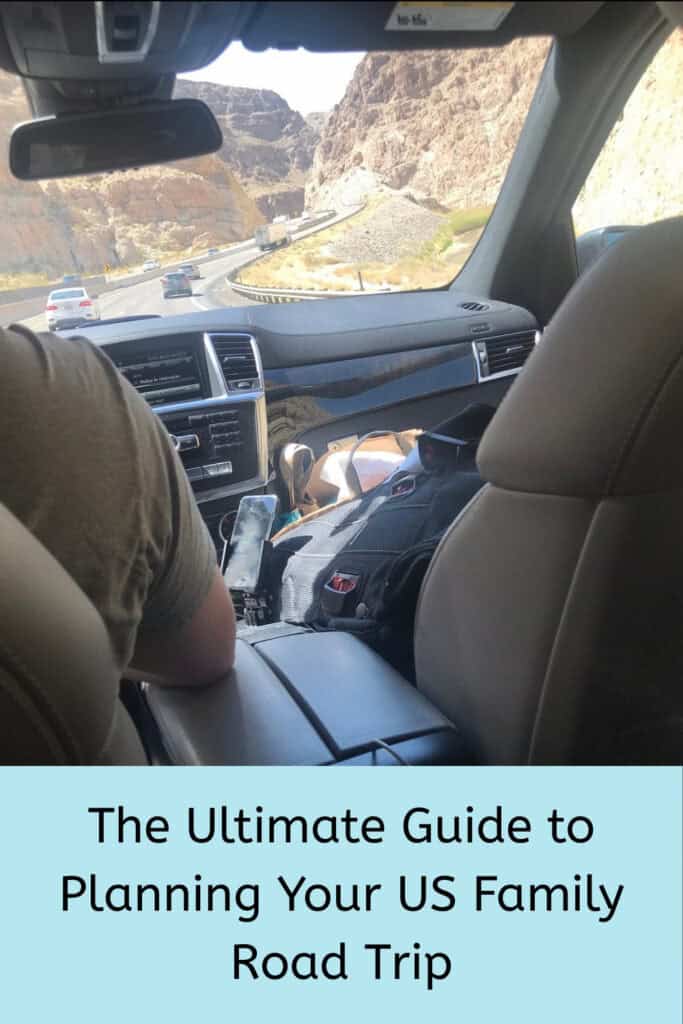
Some of our most fun and memorable trips (as a couple AND as a small family) have been road trips. And we’ve done a lot, from semi-local ventures (often 3-5 hours) to driving across the country 3 times. Road trips with kids can be tough, but awesome! They allow for these unexpected special moments that are so cool: exploring a cool area after a pit stop, hearing your kids random observations, enjoying actual peace and quiet together on long stretches.
Why Road Trips Are Worth It, Even When They’re Hard
Flying with kids is expensive, logistically exhausting, and gets harder the more gear you’re traveling with. A road trip lets you bring everything without paying checked bag fees or navigating an airport with a melting-down toddler. You set your own schedule. You stop when you want to. You can pull over when you spot something interesting.
There’s also something irreplaceable about the in-between. The small towns you’d never have found otherwise. The roadside produce stand. The weird attraction that turns out to be the trip highlight. The long hours in the car where your kid actually talks to you because there’s nothing else to do.
Road trips are also one of the more budget-friendly ways to travel as a family. No flights, more control over food costs, and the flexibility to cook or snack your way through the drive instead of eating at airports. More on the numbers in the [family vacation budget breakdown], but a well-planned road trip can cost significantly less than an equivalent flight-based trip.
How to Choose the Right Route for Your Family Road Trip
Not every route works for every family. And, of course, your starting location matters a lot! Here’s how to narrow it down before you commit.
Start with your drive tolerance. How long can your family realistically be in the car before things fall apart? For us, six hours is about the ceiling in a single day, and that’s with real stops. If you have toddlers or kids under five, plan shorter driving days and build in more buffer time than you think you need. A two-day drive is often a lot more enjoyable than one brutal marathon.
Can’t stress this enough: Don’t do the brutal marathon! You may be tempted at some point. You might have a destination in mind, and if you can just “push it out” a little farther, you can make it. I get it. But I tell you this from experience, it’s not worth it! You risk going past the point of no return, in which your fam (and likely, you!) are OVER IT. Hungry, bored, needing movement. There could be freak outs. Fights. Bad vibes!
Think about what your kids actually enjoy. Beach kids and mountain kids need different routes. A six-year-old who’s obsessed with wildlife is going to have a very different trip than one who wants theme parks or city exploration. The best family road trip matches the destination to your actual kid, not just what looks good on a highlight reel.
Consider the season. Some routes are magical in fall and rough in summer heat. Others are best in spring when crowds are thinner. It’s worth thinking about before you book anything.
The Best US Family Road Trip Routes
Here are the routes we love most for families, covering different regions, trip lengths, and vibes.
The Southeast Loop: Smoky Mountains to Gulf Coast
Best for: Families who want variety in one trip
Drive time: Variable; easily done in 1-2 weeks
Kid factor: High. Wildlife, easy hiking, beach at the end
This is one of our personal favorites and one of the more underrated road trip routes in the country. Starting in the Smoky Mountains and working your way down toward the Gulf Coast gives you real range. Gatlinburg for the kitschy fun, a few days hiking easy trails in Great Smoky Mountains National Park, and then south toward Gulf Shores or 30A for a beach finish. The Gulf Coast water is calm and shallow, which is great for little kids, and the drive through takes you through some pretty countryside.
We’re Raleigh-based, so the Smokies are less than four hours away. That makes this one especially easy for us to break up naturally.
The Pacific Coast Highway
Best for: Older kids and families who love dramatic scenery
Drive time: 7-10 days from LA to San Francisco, or reverse
Kid factor: High for scenery lovers; moderate for very young kids
The PCH earns every bit of its reputation. Driving California’s coastline with the ocean on one side and cliffs on the other is something else, and the stops along the way (Big Sur, Carmel, Morro Bay, Hearst Castle) give you built-in breaks that feel like mini-adventures. It’s a slower drive than the mileage suggests because you’ll want to stop constantly, which is actually great with kids. Just book accommodations well in advance. The coastal towns fill up fast.
Route 66: Chicago to Santa Monica
Best for: Families who love Americana and a little history
Drive time: 2-3 weeks for the full route; sections work as standalone trips
Kid factor: High for curious kids; some stretches are long and flat
Route 66 is the classic American road trip for a reason. The roadside stops (Cadillac Ranch, quirky diners that haven’t changed since 1955, the Blue Swallow Motel) are the kind of thing kids talk about long after the trip is over. Many families do sections rather than the whole route. The New Mexico and Arizona stretch is particularly beautiful.
Utah’s Mighty Five
Best for: Families with older kids or outdoorsy families with good carriers for toddlers
Drive time: 7-10 days to hit all five parks
Kid factor: Very high for outdoorsy families
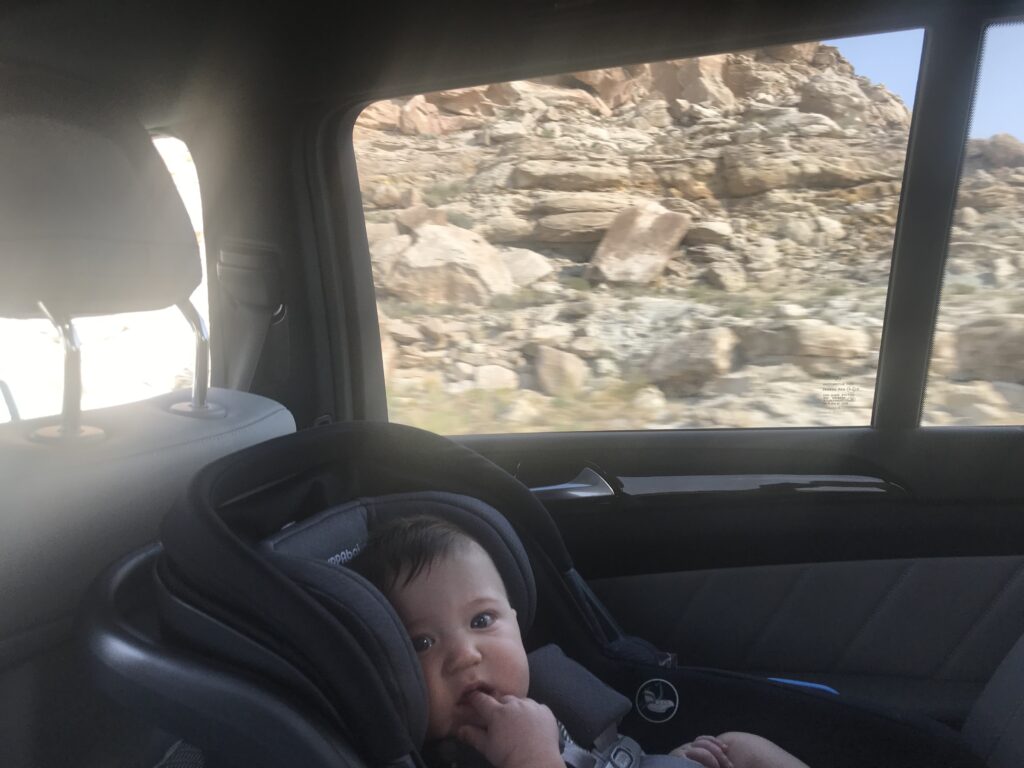
Arches, Bryce Canyon, Canyonlands, Capitol Reef, and Zion. Utah’s five national parks are some of the most spectacular landscape in the country, and the drives between parks are beautiful in themselves. The parks offer a range of hiking difficulty levels so you can find something that works for your kids’ ages. Book campsites or lodges well in advance, especially for Zion.
The New England Fall Loop
Best for: Families who love small towns, foliage, and good food
Drive time: 5-7 days for a solid loop
Kid factor: High for families who like exploring towns; lower for beach or thrill-seekers
If you’ve never done New England in October, it’s the kind of thing that makes you stop the car and stare. The foliage is extraordinary, the small towns are charming and very manageable with kids, and a loop through Vermont, New Hampshire, and Maine with stops at farms and apple orchards is a trip the whole family tends to love.
What to Pack for a Family Road Trip
Packing for a road trip is its own art form. You have more space than you do flying, but “more space” disappears fast when you add beach gear and everyone’s shoes.
The cooler. This is load-bearing infrastructure. A good cooler with real ice or ice packs is one of the best investments you can make for a road trip. It means you’re not stopping at fast food every time someone’s hungry and not spending $7 on a gas station water bottle. Pack real snacks, easy lunch stuff, and plenty of cold drinks. The full cooler packing list is in the [road trip snacks post].
The activity bag. This lives in the back seat, within reach of small hands. Depending on your kid’s age: coloring books, a new small toy they haven’t seen yet, sticker books, an audiobook, headphones. The key is having a few things that feel new and special, not just whatever was already floating around the house.
The car comfort kit. Neck pillows, a small blanket, motion sickness tablets if your kid is prone to it (learned this the hard way), a change of clothes for everyone in a bag that’s accessible without unpacking the whole trunk, and a small first aid kit. These take up almost no space and save you repeatedly.
An entertainment plan. Yes, screens. Not pretending otherwise. But the trips where we’ve been most intentional about mixing screen time with other things (audiobooks, road trip games, just talking) are the ones that feel the most memorable. Have a plan for both.
For the full breakdown by category, see [The Complete Family Road Trip Packing List].
How to Keep Kids Happy on a Long Drive
There’s no trick that makes six hours in a car feel like nothing to a young child. But there are things that help a lot.
Schedule stops like you mean it. Build in a 20-minute stop every two to three hours where kids can actually run around. A playground is better than a parking lot. The app iExit is good for finding what’s ahead on the highway, including rest areas with playgrounds.
Front-load the exciting stuff. If you have a great audio story or a new activity, save it for hour three, not hour one. You want something in reserve for when the novelty has worn off.
Give kids some control. Letting your kid pick a song, choose a snack from the cooler, or be “in charge of the map” gives them something to do and reduces the spiral.
Child development experts note that young children struggle with abstract time (“two more hours”) but respond well to concrete milestones. Try framing the drive in terms of landmarks or stops rather than time. “We stop when we get to the mountains” lands very differently than “two more hours.”
Have realistic expectations. Some drives are going to be hard. That’s normal and it doesn’t mean road trips are wrong for your family. It means you’re in the car with a real child.
Expert Tips for Family Road Trips
We’re not the only ones who have done this a few times. Here’s what people who know a lot about family travel and child development have to say.
On building in downtime: Family travel writer Megan Eileen McDonough of Mapping Megan puts it simply: “The biggest mistake families make on road trips is trying to see too much. When you’re traveling with kids, the moments that matter most are usually the ones you didn’t plan.”
On keeping kids regulated in the car: Pediatric occupational therapists often point out that long car rides are genuinely hard on kids’ sensory systems. Dr. Angela Hanscom, author of Balanced and Barefoot, has written about how children need regular movement breaks to stay regulated and focused. Building in stops where kids can run, jump, and move around isn’t a nice-to-have. It’s actually important for how they feel in the car the rest of the day.
On choosing your route: Outdoor adventure writer and father of three, Brendan Leonard (known for his work at Semi-Rad), has described the road trip this way: “The best thing about driving somewhere is that you can stop anywhere.” It sounds simple, but it’s a good reminder that flexibility is the feature, not the bug.
Making Your Home Base Part of the Experience
One of the things that makes a family road trip feel restful rather than just exhausting in a different location is arriving somewhere that actually feels like home. That’s where our whole [Home Base philosophy] comes in.
When we’re road tripping, we almost always stay in vacation rentals rather than hotels when we’re planning to be somewhere for more than a night or two. Having a kitchen means we can feed Ziggy real food. Having a living room means we can decompress like a family instead of all sitting on hotel beds. Even on nights when we’re just passing through and staying in a hotel, there are things we do to make it feel less like a layover. See [How to Make a Hotel Room Feel Cozy for Your Family] for the full approach.
Road Trip Budgeting: What It Actually Costs
The cost of a family road trip varies a lot based on distance, accommodations, and how often you’re eating out. But here’s a rough framework.
Gas is usually the most predictable line item: figure out your car’s MPG, check current prices along your route, and do the math. Accommodations are where the biggest variable tends to be. A vacation rental costs more per night than a budget hotel but can be cheaper overall for a family of four than paying for two hotel rooms. Food is where road trips can either save you a lot of money (cooler, cooking in) or get expensive fast (eating out every meal on the road).
For a full breakdown, see the [family vacation budget breakdown].
FAQ: Family Road Trips
How long of a drive is realistic with young kids? Most families with kids under five find that four to five hours is about the daily limit before everyone’s done. With kids six and up, six to eight hours is more manageable, especially with good stops built in. The general rule of thumb is to plan for more time than you think you need and treat the stops as part of the trip rather than an inconvenience.
What’s the best age to start road tripping with kids? There’s no wrong age, but many families find the sweet spot is somewhere between two and four years old. Babies actually travel surprisingly well in cars (they sleep a lot). The harder age tends to be the toddler stage, roughly 18 months to two and a half, when kids want to move constantly and have limited patience. That said, families do great road trips at every age. It’s more about managing expectations and building in the right stops.
Should we drive through the night to avoid having kids in the car? Some families swear by this. If your kids sleep well in the car and you’re comfortable driving at night, it can work really well. The downside is that you and your partner are exhausted when you arrive. If you have two drivers who can take turns and the kids are reliable sleepers, it’s worth considering for longer stretches.
What do you do when kids fight in the back seat? First: it’s going to happen. Second: headphones and audiobooks or podcasts can be a genuine lifesaver because everyone’s in their own world. Dividing the back seat with a small pool noodle (yes, really) is a trick a lot of road-tripping parents swear by. And sometimes the most effective thing is just pulling over, getting everyone out of the car, and giving it five minutes.
Is it cheaper to road trip than to fly? Usually, yes, but it depends on your route and how you handle accommodations and food. The gas cost is often significantly less than flights for a family of four. Where road trips can get expensive is if you’re eating out every meal and staying in hotels. With a cooler and vacation rentals, you can keep costs down considerably. See the [family vacation budget breakdown] for real numbers.
What should I never do on a family road trip? Skip the rest stops. Seriously. Trying to push through because you’re “almost there” is one of the most common ways a good trip turns into a miserable one. Build the stops in. They’re part of the trip.
Looking for more? See the [complete family road trip packing list], [road trip snacks for kids], and [how to make a long road trip feel cozy]. Or if you’re starting from scratch on planning, the [family vacation planning guide] is a good place to begin.